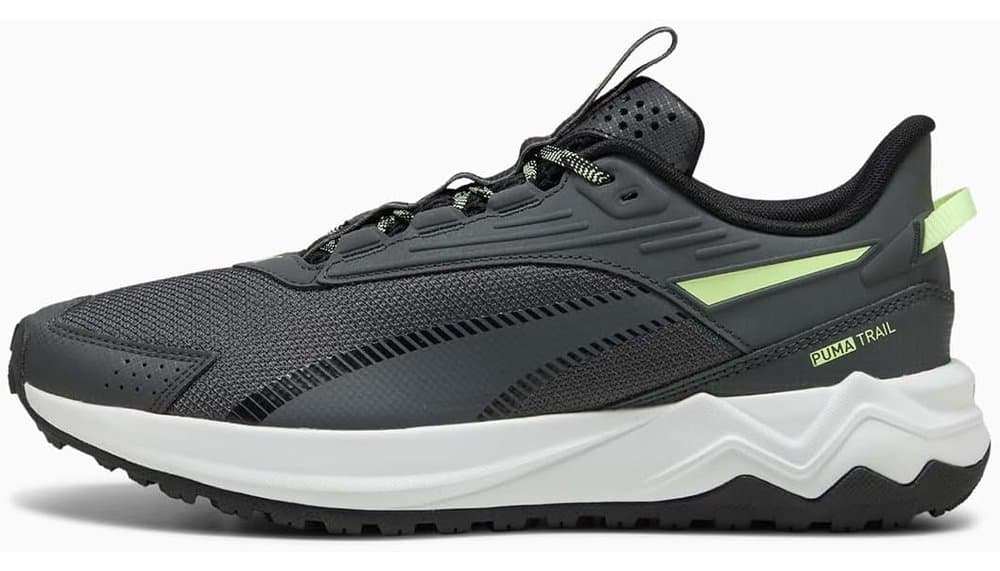
In the demanding world of HYROX, where performance is measured by the ability to chain together running, rowing, pull-ups, and carries under intense fatigue, the choice of footwear is a strategic decision. It's not just about running, but about absolute versatility. The PUMA Extend Lite Trail enters the market with a promise of trail versatility. But does this "all-terrain" versatility translate into performance on the specific floor of a HYROX competition? We will dissect this shoe through the lens of the eight stations and the running, relying on its technical specifications and community feedback, to determine if it can be an asset or too significant a compromise for the serious competitor.
Strengths
Based on the specifications and user feedback, several qualities of the PUMA Extend Lite Trail stand out immediately.
Immediate Comfort and Adaptability. The SOFTFOAM+ technology in the sockliner is consistently praised. Users describe a feeling of comfort from the first step, a non-negligible asset for enduring the long duration of a HYROX race. The upper design and the roomy toe box allow for an even fit, reducing the risk of pressure points during lateral movements at stations like burpees or farmers carries.
"Door-to-trail" Versatility. This is its main selling point. The shoe is designed to transition smoothly from pavement to trail. For HYROX, this theoretically means a fluid transition between running sections on smooth floors and stations on potentially uneven ground (like the farmers carry on mats). Its flexibility is appreciated, allowing the foot to adapt naturally to different supports.
Contained Weight and Agility. Compared to heavier, more structured trail shoes, the Extend Lite Trail positions itself on lightness. This characteristic is crucial for the running phases in HYROX, where every gram saved on the feet translates to energy savings over the total distance.
Weaknesses
Expert analyses and feedback from more technical terrains point to limitations that become potential weaknesses in the hyper-specific context of HYROX.
Limited Grip in Wet Conditions. The PUMAGRIP outsole, although presented as suitable for "all surfaces," shows its limits according to testers. On dry surfaces, it is effective. As soon as moisture is involved (profuse sweating on the rower, wet floor, or even sweat dripped on the floor during burpees), the grip becomes less reliable. This is a critical point for movements like the sled push or sled pull, where power transfer to the ground depends entirely on the shoe's traction.
Lack of Responsiveness and Dynamism. The running community notes that this shoe is made for moderate, comfortable paces, not for speed or surges. In HYROX, the ability to accelerate on the 1km running sections, even under fatigue, is paramount. The performance EVA midsole lacks energy return and pop, which can handicap athletes seeking a dynamic stride.
Average Breathability. The upper, partly made from recycled materials, offers modest ventilation. During a long, intense effort like HYROX, where body heat is extreme, poor evacuation of heat and moisture can lead to a feeling of heaviness, discomfort, and increase the risk of blisters.
Absence of Pronounced Lateral Stability Structure. While the lockdown is even, the shoe is not designed with a rigid lateral reinforcement. For heavy carrying movements like farmers carries or sandbag lunges, where ankle and foot stability is severely tested under load, this lack of support can be perceived as a lack of security by some competitors.
Let's now evaluate the theoretical performance of the PUMA Extend Lite Trail station by station.
On the running sections (1km x 8): This is where its "trail" characteristics could be an asset on the sometimes slippery arena floors. Its comfort over distance is a real plus. However, its lack of responsiveness is its Achilles' heel. It forgives a tired stride but does not aid in surging. It is suited for a steady-pace running strategy, not for seeking explosive performance on the segments.
On the strength and movement stations:
Rower and SkiErg: Its flat sole and flexibility allow for good contact with the footplate. No major issues to report here.
Sled Push & Sled Pull: This is a warning point. The traction of the PUMAGRIP outsole, especially if the floor is smooth and the athlete is sweating profusely, could be insufficient for optimal power transfer without slipping. This is a disadvantage compared to cross-training shoes with more aggressive soles.
Burpees: The flexibility and lightness are advantages. The shoe allows for good mobility for the descent and push-up movement.
Farmers Carry, Sandbag Lunges, Kettlebell Swing: This is where the lack of lateral structure and stability becomes palpable. For a heavy carry, competitors seeking maximum support might find the shoe too "soft" and not locking enough. The good toe box width, however, is a positive point to avoid compression during lunges.
Under fatigue and during rapid transitions: The overall comfort and even fit work in its favor for enduring fatigue. The standard laces allow for a good lockdown. However, if the upper becomes wet (from sweat or a humid environment), its long drying time and the loss of sensation could harm comfort during subsequent transitions.
Technical Specifications
Characteristic
Detail
Model Name
PUMA Extend Lite Trail
Type
Trail running shoe / versatile
Target Audience
Trail beginners / casual runners seeking comfort
Outsole
PUMAGRIP rubber with lugs for traction
Midsole
Performance EVA
Sockliner
SOFTFOAM+ (thick in the heel)
Upper
Textile material (≥20% recycled) with PUMA Trail reinforcements, Formstrip band
Closure
Standard laces
Toe Shape
Round
Weight (estimated)
Light (for a trail shoe)
Drop
Not specified by manufacturer (generally moderate, ~8-10mm)
Intended Use
Trail, hiking, versatile outings
What Users and Testers Say
A synthesis of customer reviews and available expert analyses paints a clear consensus.
The recurring positive points revolve around immediate comfort, lightness, and aesthetics. Buyers using them for walking, general fitness, or beginner trail running are generally very satisfied. Comments like "very good," "comfortable," "aesthetically pleasing," and "good value for money" come up often. This confirms its market positioning: a pleasant entry-level shoe to wear.
The negatives or expressed limitations from more seasoned testers corroborate the analysis. The shoe is described as not very responsive and limited on technical or wet terrain. One expert summarizes that it is "ideal for initiation or casual practice" but that it "does not aim for high technical performance." The breathability of the upper is also mentioned as a weak point. No specific HYROX experience feedback was identified, which is logical for a mainstream model.
Conclusion
The PUMA Extend Lite Trail is a comfortable, light, and versatile shoe that excels in its niche: offering an introduction to trail running or supporting moderate-paced fitness outings. However, transposing these qualities into the demanding arena of HYROX reveals significant compromises.
For the HYROX competitor, it presents a mixed profile. It may suit a beginner tackling their first competition with the main goal of finishing, prioritizing comfort over distance and basic versatility. Its comfort and lightness are real assets for surviving the 8km of running.
On the other hand, for the athlete aiming for performance, efficiency at each station, and chasing times, its limitations are too pronounced. The lack of responsiveness in running, the uncertain grip on wet surfaces during sleds, and the absence of lateral stability for heavy carries make it a sub-optimal choice. It lacks the bite, dynamism, and specific support that dedicated cross-training shoes or more responsive running shoes can offer.
In summary, the PUMA Extend Lite Trail is not a shoe designed for HYROX. It can play a role as a backup or for a first experience, but serious athletes should look towards options offering better synergy between aggressive traction, stability under load, and dynamic energy return.
100% free and independent — All our articles are written independently, without any sponsorship. We may receive a commission if you make a purchase through our links, at no extra cost to you.