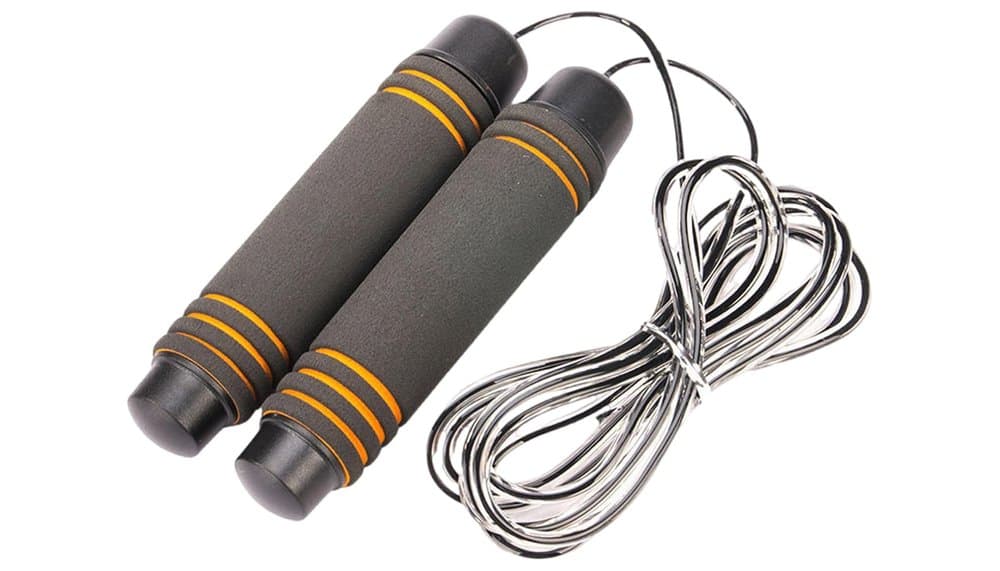
In the demanding world of HYROX, where every second counts and equipment must survive a brutal sequence of running, rowing, pull-ups, and carries, the choice of training accessories is strategic. The jump rope, an essential tool for cardio rhythm and hand-foot coordination work, comes in many models. The YUPEIUKLI Weighted Jump Rope enters this arena with a promise: to add increased resistance for greater muscular and metabolic stimulus. But does this characteristic make it an ally or a handicap for HYROX preparation and performance? We analyze this product from the unique perspective of the competition's demands, dissecting its specifications and cross-referencing community feedback.
Key Strengths
Based on its specifications and general trends for weighted ropes, the YUPEIUKLI presents several assets for the functional athlete.
An Integrated Strengthening Tool: The main selling point of this rope is its integrated weight. For a HYROX athlete, this translates to increased work for the shoulder stabilizers, forearms, and calves. These muscle groups are crucial for events like the Farmers Carry, Sled Push, or even the rower, where grip strength and lower limb endurance are severely tested. On paper, integrating this type of resistance into a cardio exercise like jumping rope allows for the development of very valuable specific muscular endurance.
Performance-Oriented Construction: The specs announce high-performance bearings for smooth rotation. This is a non-negotiable point for performing efficient double unders, especially under fatigue. The soft foam handle also promises a comfortable, non-slip grip, a detail that becomes essential when hands are sweaty after a rower or burpee station.
Asserted Versatility and Adaptability: With an adjustable length (approx. 3m) and a light total weight (approx. 200g), the rope adapts to different body types and is easy to transport. This aligns well with the reality of a HYROX athlete who often trains on the go or in a box.
Weaknesses
However, general feedback on weighted ropes and the constraints of HYROX point to potential limitations.
Durability in Question Against HYROX Surfaces: The main material of the cable is sheathed steel wire. Testers and the community consistently emphasize that this type of cable wears out quickly on abrasive surfaces like concrete, tartan, or asphalt. Yet, a HYROX athlete trains and runs on these surfaces. Premature wear could compromise the tool's reliability in the medium term.
A Compromise on Pure Speed: A weighted rope, by definition, will never be the fastest tool. For specific training sessions aimed at maximizing velocity and leg frequency for the runs, a lighter speed rope is often preferred. The weight can slightly alter the timing, which could be counterproductive if the goal is to replicate the feel of a classic rope in competition.
Lack of Concrete User Experience: A notable point is the absence of verified customer reviews for this specific model. We must therefore rely on technical analysis and general feedback on the category of weighted ropes, which limits our ability to assess its long-term reliability and exact feel in hand.
Let's now evaluate the YUPEIUKLI Weighted Jump Rope against the key phases of a HYROX race.
During the Running: Jump rope training improves coordination, bounce, and running economy. The added weight here provides a proprioceptive load that can strengthen the ankle and calf. However, the movement is slightly different from a running stride. Its usefulness therefore lies more in complementary strengthening than in directly simulating running.
During Strength and Mobility Stations: This is where its potential shines. The forearms and shoulders engaged by the weight are the same ones that burn during Farmers Carry or Wall Balls. Using it at the end of a session, in a state of fatigue, can be an excellent way to strengthen the specific mental and physical resilience required for the HYROX sequence.
Under Intense Fatigue and Fast Transitions: The central question is: does this rope remain manageable when heart rate is at its maximum and coordination drops? The smooth bearings are the key element here. If they deliver on their promise, they should allow for maintaining a consistent rope turn even when technique deteriorates. The non-slip grip of the handle is also crucial to prevent the tool from becoming an additional stress factor.
Comparison with HYROX Requirements: A HYROX competition does not require a jump rope. The tool is therefore purely for training. It must be reliable, simple, and effective. The YUPEIUKLI, with its simple adjustment and seemingly robust construction, aims for this simplicity. But the requirement for extreme durability for a tool used regularly, often on hard surfaces, remains the major question mark based on common feedback on this type of equipment.
To date, there are no consolidated customer reviews for the specific YUPEIUKLI model. Our analysis must therefore be based on general feedback from testers and the fitness community on the category of weighted jump ropes.
Positive Trends Noted by Testers:
Better Control and Learning: The extra weight provides a more pronounced kinesthetic feedback, helping beginners better perceive the rope in space and master the movement more quickly, including double unders.
Increased Muscular Stimulation: The effort is unanimously recognized as greater for the calves, shoulders, and forearms, making it an excellent tool for metabolic conditioning and strengthening.
Grip in Real Conditions: Ergonomic and non-slip handles (like the foam here) are praised for maintaining a good grip even with sweaty hands, a critical point for any intense training.
Recurrent Criticisms and Warnings:
Cable Durability: This is the most frequently cited weakness. Sheathed steel cables wear out prematurely on abrasive surfaces (concrete, asphalt). Experts consistently recommend use on mats, wooden floors, or smooth surfaces.
Not the Ultimate Speed Tool: It is not designed for sessions of pure speed and maximum frequency. Athletes seeking this will prefer an ultra-light speed rope.
Specific Fatigue: Training with a weighted rope is more demanding on the forearms and calves, requiring progressive integration into programming and adapted recovery times to avoid overload.
Conclusion
The YUPEIUKLI Weighted Jump Rope presents itself as a relevant and specific training tool for the HYROX athlete, with important nuances. Its main advantage is to combine intense cardio stimulus with targeted muscular strengthening on key competition muscle groups (forearms, shoulders, calves). For hybrid metabolic conditioning sessions or strengthening at the end of a circuit, its profile seems well-suited.
However, its adoption must be considered carefully. It will not replace a speed rope for pure velocity work. Above all, its long-term durability is the great unknown, and its use will very likely need to be limited to smooth surfaces (box mats, hardwood) to preserve the steel cable. In the HYROX ecosystem where robustness is king, this constraint is significant.
In summary, this rope can be a good addition to a toolkit for an athlete looking to vary and intensify their general physical preparation sessions, provided it is used on the right surface and not expected to deliver peak speed performance. For a single investment meant to handle everything, including outdoor training, its longevity is questionable.
100% free and independent — All our articles are written independently, without any sponsorship. We may receive a commission if you make a purchase through our links, at no extra cost to you.