If you are getting into Hyrox, you already know your feet are going through hell: running, sled push, ramping, everything is in there. Choosing the wrong pair of shoes is signing up for blisters and diminished performance from the very first event. Frankly, don't let this detail ruin your training and your race; a good pair is not an accessory, it's the foundation of your success.
Key Points to Remember
Key Takeaways
- The ideal shoes for Hyrox are a versatile hybrid, combining running cushioning, cross-training stability, and multi-surface grip.
- A rigorous fitting that simulates the movements of the race (jumps, lunges, pushes) is crucial to avoid pain and underperformance.
- Adapting your choice to your morphology (gait, weight, foot volume) is as important as the technical characteristics of the shoe.
- Rotating between two pairs and careful maintenance significantly extend the lifespan and performance of your shoes.
- A perfect shoe for Hyrox offers an intelligent compromise: immediate comfort, firm support, and breathability to move through the events.
Understanding the Unique Demands of Hyrox
Hyrox is not a classic running race. It's a brutal sequence of very different challenges, and your Hyrox shoes need to be Swiss Army knives. They must handle three distinct playing fields, sometimes within the same minute.
The Infernal Trio: Running, Pushing/Pulling, Lateral Movements
First, the running. You will run 8 km, in 1 km segments. You therefore need proper cushioning to protect your joints on the track or the site's asphalt. But be careful not to fall into the trap of a shoe that's too soft: you would be unstable for what comes next.
Next, the strength events like the sled or the burpee broad jump. Here, stability is key. A wide and flat sole in the forefoot area will give you a solid base to push and pull without your foot moving inside the shoe. Excessive twisting of the sole during a sled push is a pure loss of energy.
Finally, movements like the sandbags or the ramping. They require mobility and sometimes lateral support. An upper that's too rigid or a shoe that's too high can limit your ankle flexibility. You want to feel the ground, but not to the point of hurting yourself.
The Real Challenge: The Transition
The genius of Hyrox lies in the rapid transitions. You finish a fast run and, 30 seconds later, you need to be stable on a rower. Your shoes must therefore offer an intelligent compromise. A sole with good grip (traction) is crucial, but this grip must be versatile: gripping on a clean surface for running, but also on a potentially dusty or wet floor around the stations. A grip that's too aggressive, like a trail shoe's, could "stick" you to the ground and hinder rapid foot movements during running. It's a delicate balance.
Deciphering the Technical Features of a Good Pair
Here, we leave artistic ambiguity behind and get concrete. A Hyrox shoe is not just a simple running sneaker; it's a multifunctional tool. It must excel on concrete and during strength events, without letting you down. Here's what you really need to focus on.
Cushioning: Finding a Compromise
Too much foam, and you lose stability for pushing a sled or jumping on a box. Not enough, and your joints will suffer over the running kilometers. The ideal? Moderate and responsive cushioning. Look for standard drop heights (between 6 and 10 mm) that offer a good balance. Avoid ultra-maximalist "cloud-like" models – frankly, you'll feel like you're running and pushing on marshmallows, it's counterproductive.
Traction and the Outsole: The Key to Versatility
The outsole is your point of contact with all challenges. It must be flexible enough to be agile while running, but with an aggressive multi-directional grip. For indoor events (ramping, burpees), a sticky rubber compound that doesn't slip on plastic or PVC is essential. Look at the lug depth: 3 to 4 mm deep patterns are a good standard. An outsole that's too smooth for trail running will be disastrous during lateral movements.
Weight and Breathability: Don't Weigh Yourself Down Unnecessarily
Every gram counts when you're moving back and forth. Prioritize lightweight models, often under 300 grams for a size 42. But lightness should not equal fragility. The mesh should be breathable to evacuate sweat (you will sweat, that's for sure), but sufficiently reinforced in high-wear areas, like the little toe that rubs during lateral shuffles. A shoe that turns into a bucket after the first ergometer event is the best way to end up with your feet in a sorry state.
Heel and Midfoot Stability
This is often the most underestimated element. A firm heel cage or counter is crucial. Why? When you push or pull a load, your foot tries to move inside the shoe. A well-holding heel prevents friction and energy loss. Lace up the shoe and try to rotate your heel: it should hardly move. This is what makes the difference between a pair that carries you and one that holds you back on the strength stations.
Our Selection
Hey runners! We've put three models from Puma's Nitro range through their paces, shoes that all promise performance and comfort, but with very different purposes. To help you get a clearer picture, here's our field experience, from daily training to competition.
| Product | Recommended Use | Cushioning (Nitrofoam) | Stiffness / Propulsion | Outsole (Pumagrip) |
|---|---|---|---|---|
| PUMA Deviate Nitro 3 HYROX | Competition / HYROX / Fast Training | Firm and Responsive | Very Stiff (Carbon Pwrplate) | Excellent multi-surface grip |
| Puma Velocity Nitro 4 | Daily Mileage / Moderate Pace | Soft and Comfortable | Flexible, Natural | Good grip, Durable |
| Puma Electrify Nitro 3 | Versatile Training / Beginners | Balanced, Versatile | Semi-Rigid (TPU) | Adequate, Normal Wear |
PUMA Deviate Nitro 3 HYROX
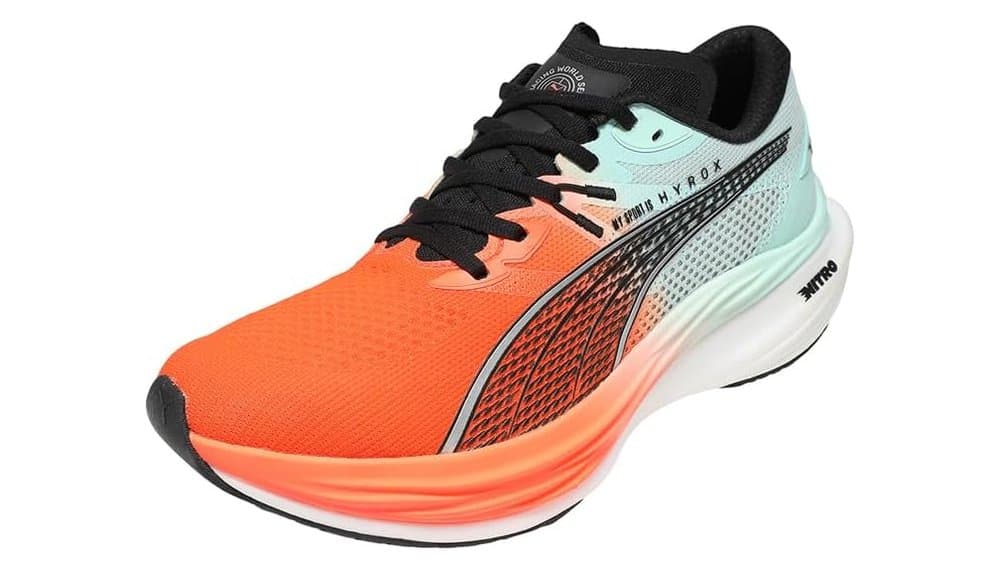
This shoe is clearly the race beast of the selection. It's designed for speed and events like HYROX, where you need to alternate running and functional movements. From the first stride, you feel the stiffness provided by the carbon Pwrplate – it really pushes you forward, which is great for intervals or runs where you want to have fun with your time. The Nitrofoam cushioning is firm and responsive, not soft at all, giving a very direct feeling of propulsion.
The big strong point is the Pumagrip outsole. Honestly, it grips everywhere: wet asphalt, gym floors, even on the boards of a cross-training box. For events with quick direction changes, it's a real safety asset. However, let's be honest: this is not the most comfortable shoe for racking up easy mileage. The build is quite aggressive, with a drop that may not suit everyone, and the heel counter is snug for good support. If you have a wide foot or are looking for a shoe for your long endurance runs, look elsewhere. It excels in its role as a speed and competition specialist, but it's not made for casual runs.
Puma Velocity Nitro 4
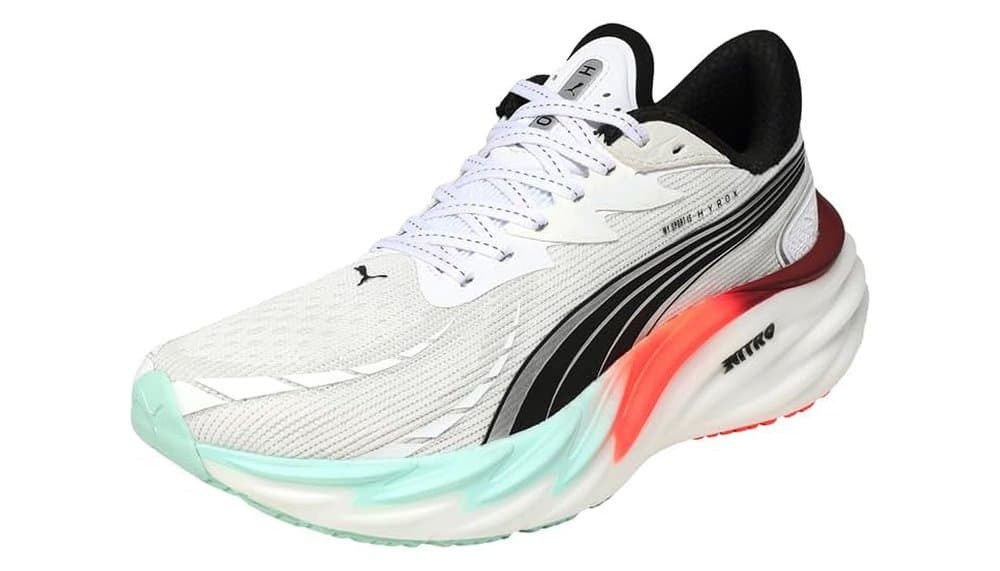
The Velocity Nitro 4 is our favorite for daily training. It's the shoe you can put on to rack up miles without thinking about it. The Nitrofoam cushioning here is much softer and more forgiving than in the Deviate. The sensation underfoot is comfortable, protective, perfect for long runs where the priority is saving your legs. There's no carbon plate, so the stride is natural and flexible.
In terms of comfort, the mesh upper is very breathable and the fit is wider and more accommodating than the Deviate's. It's a forgiving model that suits a wide range of runners. The Pumagrip outsole does its job well in terms of durability and grip on the road. The only downside is that this versatility comes at a cost in terms of sensation. It lacks a bit of pep for fast sessions. If you want to do intervals, it will keep up, but without giving you that free energy and dynamism of a plated shoe. It's an excellent, reliable workhorse, but not a rocket.
Puma Electrify Nitro 3
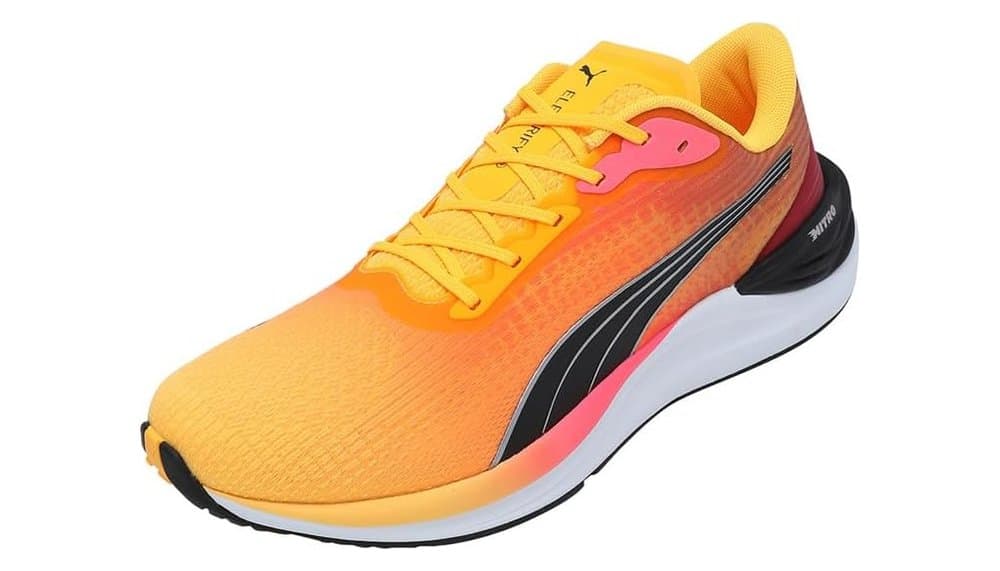
The Electrify Nitro 3 positions itself as an intermediate option, often more affordable. It also uses Nitrofoam, but the formulation is different: the cushioning is adequate without being exceptional, a bit less dense and perhaps a bit less durable than on the Velocity in my opinion. It incorporates a TPU plate (not carbon) that adds a bit of stiffness and stability, without being as radical as the Deviate's Pwrplate.
It's a shoe aimed at versatility: it can do a bit of everything, from easy jogging to slightly more brisk sessions. The value for money is often its main selling point. However, it shows its limits if pushed. The cushioning can feel a bit "flat" over long distances compared to the Velocity, and the propulsion is less pronounced than on the Deviate. Some user feedback also points to issues with premature outsole wear or color discrepancies compared to photos. It's a good model for beginners or for general training, but runners more demanding about long-term comfort or performance might find better options elsewhere.
To conclude, the choice really depends on your practice. The Deviate Nitro 3 HYROX is your partner if you're aiming for pure performance, competitions, and fast sessions. The Velocity Nitro 4 is the undisputed queen of comfort and daily mileage, a reliable, unbreakable safe bet. The Electrify Nitro 3 plays the card of the versatile entry-level option, a relevant choice if your practice is varied and moderate, without seeking extreme specialization. It's up to you to see where you fit!
Adapting Your Choice to Your Body Type and Stride
This is where theory meets reality. You could buy the most recommended shoes by champions, but if they don't match your foot and your way of running, failure is almost guaranteed. Don't take chances with this.
First, Identify Your Stride Type
No need for a lab test, a simple wear test on an old pair will do. Look at the sole of your usual running shoes.
- Uniform wear in the center: You probably have a neutral stride. This is the most common, and it opens up the widest choice of models.
- Pronounced wear on the inner edge (big toe side): This is overpronation. Your ankle and foot roll too much inward. You will need a model offering good stability support, especially for the lateral push phases on the sleds.
- Wear on the outer edge (little toe side): This is underpronation, rarer. The priority will be cushioning capacity and a flexible sole to facilitate the foot's roll.
For Hyrox, a stable stride is a major asset, as there are many changes of direction and lateral foot placements. Uncompensated overpronation can quickly become painful.
Then, Consider Your Body Type and Weight
This is not a minor detail. A light runner (<70kg) may do very well with a light, responsive shoe with less cushioning. If you weigh more than 85kg, however, you will seriously need to prioritize cushioning and support, especially to absorb the repeated impact of runs and box jumps. A sole that is too soft can also be counterproductive for propulsion on the ski-erg or rower. It's a balance to find.
See priceYour Foot Volume: The Key to Comfort
This is often overlooked, and yet! Do you have a narrow, normal, or wide foot? A high arch? Many brands now offer different widths. A wide foot squeezed into a standard shoe means guaranteed numbness after 20 minutes. Conversely, a narrow foot in a too-voluminous shoe will slide and cause disastrous friction.
My advice: when trying them on, do you feel pressure on the instep or on the small metatarsals? The shoe should hug your foot without compressing it. Don't hesitate to ask for models in a "wide" version if needed – the difference is sometimes subtle but crucial for lasting through an entire Hyrox race.
The Decisive Moment: Trying on Your Future Shoes Properly
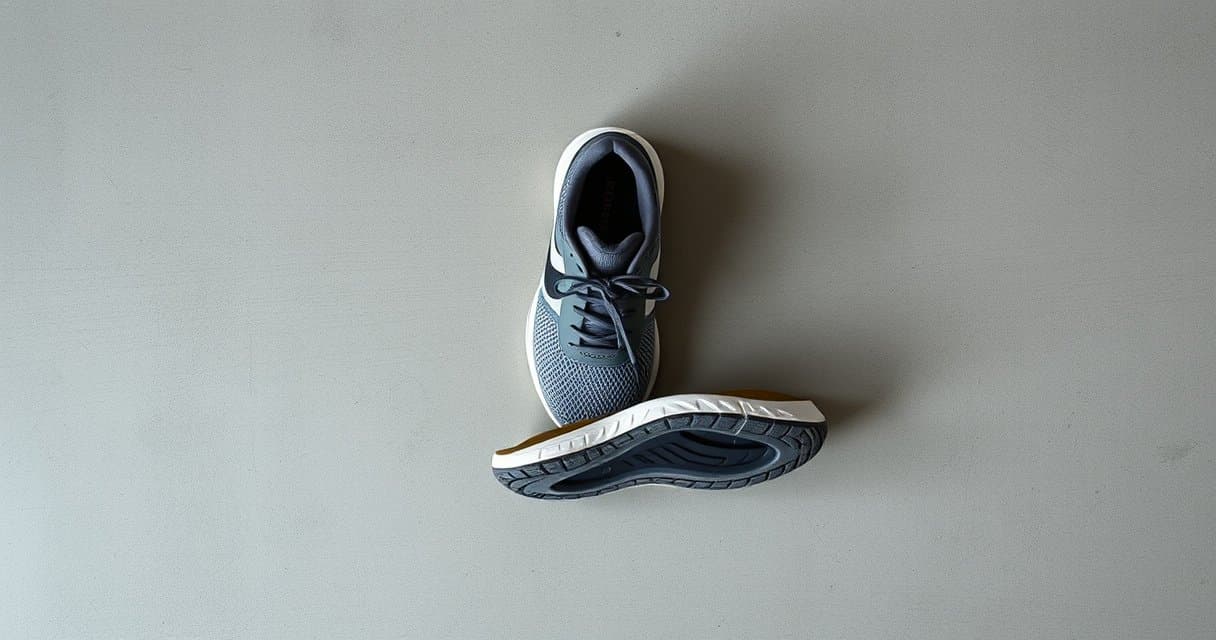
This is where everything is decided. You can have read all the reviews in the world, if the try-on is rushed, you end up with an unsuitable pair. Don't make the mistake of buying on a whim or because "it's the model so-and-so wears." Your foot is unique.
Create the Right Trying Conditions
Never go try on shoes at the end of the day, when your feet are swollen. Opt instead for a slot in the early evening after a normal day, or better yet, late morning. Bring the socks you will race in for competition – not your thin dress socks. If you usually wear orthopedic insoles, take them with you! This is non-negotiable.
The In-Store Procedure: Don't Let Yourself Be Rushed
- Put them on correctly: Completely loosen the laces before sliding your foot in. Once inside, lace them up firmly all the way to the top, as you would for a race.
- The toe space test: Standing, with weight on your foot, check that there is about a thumb's width of space (roughly 1 to 1.5 cm) between your longest toe (not always the big one!) and the front of the shoe. This is crucial for ramping descents and sudden changes of direction.
- Move! Don't just stand still on the mat. Walk, do a few deep lunges (like for a burpee or a ramping), simulate pushing a sled by leaning forward. The heel should never lift or slip. Do you feel any pressure points, pinching on the instep or on the little toe? Even if slight, it's often a bad sign that will worsen with fatigue.
Simulate Hyrox Movements
Be that slightly particular customer! Ask for some space and do more dynamic movements:
- Jumps in place: to test cushioning and lateral support upon landing.
- A short acceleration over a few meters (if space allows): to feel if the propulsion is natural.
- A squat-type crouching position: check that the material doesn't wrinkle excessively or compress the top of your foot.
Frankly, a salesperson who watches you do this with a smile knows their job. Another who pushes you to buy quickly without these tests... run. Remember that your Hyrox shoes must be comfortable immediately. Don't believe the myth of a "break-in period." A slight adaptation, yes. Pain, no.
The Ultimate Advice: Give Yourself Time
Take 20 to 30 minutes to try at least two different models, ideally on varied surfaces (running mat, tiled floor). Walk a bit, rest, put them on again. Your perception can change. And above all, listen to your foot, not the shoe's design. The perfect pair is the one you forget as soon as it's on your foot, because it becomes one with it.
Managing Your Pair: Maintenance and Rotation for Longevity
You've invested in a great pair of Hyrox shoes. Great! But the work doesn't stop there. Neglecting them is condemning them to a premature death. And frankly, at that price, it's a shame.
The Post-Training Ritual (Non-Negotiable)
As soon as you get home, don't let them rot at the bottom of your bag. Take out the insoles. Let everything air out in a dry place, but never near a direct heater which would damage the glues and materials. For cleaning, forget the washing machine; it's the best way to deform everything. A gentle brush with water and a little mild soap on the upper, and you're done. Let them air dry, stuffed with newspaper to absorb moisture and maintain the shape.
Rotation, Your Best Ally
If you train seriously, one pair is not enough. It's not a luxury, it's logic. A shoe needs 48 hours to fully recover its cushioning and expel all accumulated moisture. By forcing it every day with the same pair, you compress the foam in the midsole, which no longer has time to rebound. The result? You lose comfort and protection, and you accelerate wear.
So, think about alternating with a second pair. It doesn't need to be an identical model. An old pair of running shoes still in good condition can work perfectly for a lighter session. The idea is to give your main Hyrox shoes a rest to keep them fresh and performing longer.
Monitoring Wear to Anticipate Replacement
Don't bury your head in the sand. Inspect your shoes regularly.
- The Outsole: Look at the friction areas, especially on the heels and forefoot. When the studs or traction pattern are smooth over a large area, it's a strong signal.
- The Cushioning: Trust your feeling. If you start to feel more ground impact, if the shoes seem "flat" and less dynamic, the foam is tired.
- The Upper: Check for the absence of tears in the mesh and that the heel counter (the rigid part at the back) still holds your foot properly.
A pair dedicated to Hyrox, subjected to all those impacts and friction on the ramping or with the sleds, will have a different lifespan than a classic running pair. For a regular practitioner (3-4 sessions per week), expect about 6 to 9 months before seeing a significant drop in performance. Listen to your feet, they will tell you.
Conclusion
Never underestimate the power of a good pair of shoes for Hyrox. It's an investment in your comfort, your performance, and your enjoyment. Take the time to choose well.
Your feet will thank you at the end of every race. Good luck with your search, and see you soon on the track! Frequently Asked Questions
What shoes to choose for Hyrox?
The ideal shoes for Hyrox are hybrid models offering moderate cushioning for running, a flat and stable sole for strength events, and versatile grip for fast transitions.
Are trail shoes necessary for Hyrox?
No, classic trail shoes are too aggressive; you need a hybrid shoe with running cushioning, cross-training stability, and versatile grip for both indoor and outdoor surfaces.
What cushioning for a Hyrox shoe?
Opt for moderate and responsive cushioning, with a drop between 6 and 10 mm, to protect your joints while running while ensuring the necessary stability for pushing or pulling loads.
How to try on shoes for Hyrox?
Try them on with your running socks, leaving a thumb's width of space in front of your toes, and simulate movements like lunges, jumps, and pushes to check for support and the absence of pressure points.
Should you wear the same shoes for running and fitness in Hyrox?
Yes, the goal is to use a single versatile pair; it must therefore effectively handle the three types of effort: running, strength/pushing movements, and lateral movements.
What is the lifespan of a pair of Hyrox shoes?
For a regular practitioner (3-4 sessions per week), a pair dedicated to Hyrox maintains optimal performance for about 6 to 9 months before the cushioning and grip wear down significantly.
100% free and independent — All our articles are written independently, without any sponsorship. We may receive a commission if you make a purchase through our links, at no extra cost to you.
Guides you might like
Choosing Your HYROX Jump Rope
Choose the right HYROX jump rope to save time and energy. Avoid mistakes with our guide on finding the perfect rope for your event.
Home Gym Hyrox Guide
Start Hyrox training at home. A smart strategy to balance an active life and prepare for the competition efficiently.
Hyrox Dumbbell Buying Guide
Hyrox demands the right gear. Discover the key features for choosing competition-ready dumbbells to maximize performance and safety.
You might also like
Fitness Tech Erg Ski Machine with Platform Review
Test the Fitness Tech Erg Ski Machine for HYROX training. Delivers intense cardio and full-body strength to boost competition performance.
HOBIBEAR Barefoot Shoes Review & Test | Minimalist Sneakers
Test HOBIBEAR barefoot shoes in HYROX. Can minimalist design withstand 8km runs and 8 functional workout stations?

OMRON E3 Intense TENS Device Review
Portable TENS device for pain relief. Review of the Omron E3 Intense for managing muscle soreness and joint pain during HYROX training and recovery.