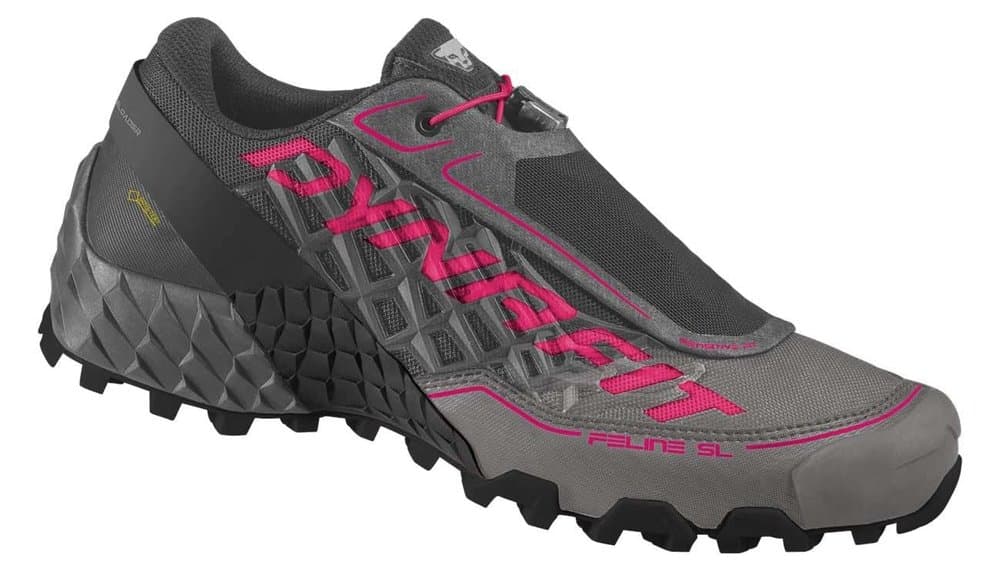
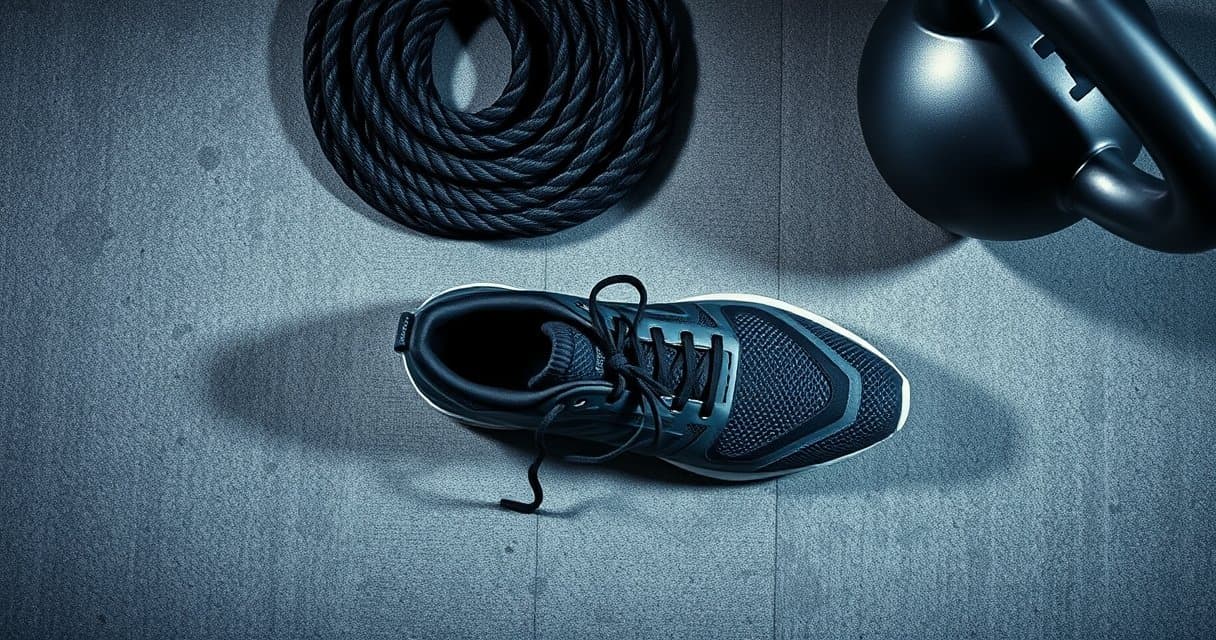
In the demanding world of HYROX, where every second counts and versatility is key, the choice of footwear is not trivial. It's not just about running, but also about pushing, pulling, jumping, and carrying. Today, we examine a model that, at first glance, seems to come from another world: the Dynafit Women's Feline SL W GTX Running Shoes. Designed for technical trails and mountains, can this trail shoe adapt to the concrete, rower mats, and sleds of a HYROX arena? This analysis will dissect its specifications and field feedback to determine if it can be an ally or too significant a compromise for competition.
Strengths
Exceptional Stability and Support: This is the major asset noted by all testers. The shoe's design, with a well-cupped heel and midfoot, provides precise lockdown that inspires confidence on unstable terrain.
Remarkable Grip: The outsole, often Vibram or Pomoca depending on the version, is unanimously praised for its grip quality. It effectively grips a wide variety of surfaces, from smooth to loose.
Lightweight and Responsive: For such a stable shoe, its contained weight is a strong point. It allows for a dynamic stride and doesn't weigh down tired legs, a non-negligible advantage late in a race.
Waterproofing (GTX): The Gore-Tex membrane provides reliable protection against moisture, whether from sweat stations or accidentally wet ground.
Weaknesses
Limited Forefoot Protection: The most recurrent critical point. The lack of a rock plate in the forefoot means the pressure from stones, or in our context, from elements under sleds or during farmers carries, can be felt.
Faulty Lacing System: The stock speed laces are frequently singled out for their discomfort, creating pressure points. The community almost systematically recommends replacing them.
Snug Fit: The shoe has a medium to low volume. For wide feet or feet swollen from effort, this precise fit can turn into an unpleasant compression sensation.
Moderate Cushioning: Designed for responsiveness on trails, it does not offer the generous cushioning some seek for running portions on hard surfaces, like in HYROX.
Let's now evaluate the Feline SL GTX against the eight stations and transitions specific to HYROX.
On the running stations (1, 3, 5, 7):
This is where its trail origins can play in its favor. Its lightweight nature is an asset for energy efficiency on the repeated 1kms. Its exceptional grip provides secure traction in turns, even on slightly damp concrete. However, the limited cushioning and minimal forefoot protection could become penalizing in the long run, especially for heavier runners or those sensitive to impact on hard surfaces. It excels in responsiveness and propulsion but may lack comfort over the total 8km distance.
On the strength and ground movement stations:
This is the real test. For the sled push and sled pull, grip is crucial. Here, the Vibram/Pomoca outsole should offer excellent traction for pushing without slipping. On the other hand, during the burpee broad jump, the thin sole and lack of protection could be unpleasant upon landing on the hands if the shoes slide slightly forward. For the farmers carry, the foot support is excellent, but the thin sole might transmit the hardness of the kettlebell handles through the soles of the feet.
Under fatigue and during transitions:
The intrinsic stability of the shoe is a huge advantage when fatigue sets in and technique degrades. It can help maintain a secure stride. The GTX membrane, while keeping the foot dry during ground exercises, can also limit breathability and accelerate the feeling of heat. The main challenge will be the fit: if the foot swells with effort, the snug cut can create pressure points.
Comparison with the ideal HYROX shoe:
An ideal HYROX shoe is a hybrid: road running cushioning for the running portions, cross-training stability for carries, a flat and grippy sole for sleds, and a breathable upper. The Dynafit Feline SL W GTX brings elements of excellence: stability and grip are present. But it makes compromises on cushioning and protection to prioritize responsiveness and ground feel, qualities more relevant on technical trails than in an arena.
Technical Specifications
Characteristic
Detail
Type
Lightweight trail running shoe
Use
Technical trail, mountain running
Drop
Not specified in data, typically low (4-6mm) for Dynafit models in this range
Cushioning
Moderate, oriented towards responsiveness
Outsole
Vibram® or Pomoca® (depending on version)
Waterproofing
GORE-TEX® membrane (GTX version)
Weight
Light (approx. 240-260g per shoe in size 38, according to sources)
Fit Type
Snug cut, medium-low volume. Cupped heel and midfoot.
Reinforcements
Protection at heel and sides. No forefoot rock plate.
Lacing
Speed lacing system (often criticized)
Breathability
Good on standard version, reduced on GTX version (waterproofing trade-off)
What Users and Testers Say
The synthesis of customer reviews and expert feedback available paints a clear consensus with some points of divergence.
Recurrent praise focuses on three pillars. First, the stability and support are consistently praised as exceptional, especially on descents and uneven terrain. Second, the grip quality of the outsole is described as reliable and high-performing on most natural surfaces. Finally, the compromise between lightweight construction and durability is highly appreciated.
The main criticisms are just as sharp. The speed lacing system is a major point of frustration, described as uncomfortable and creating pressure points, to the point that its replacement is an almost unanimous recommendation. The lack of protection in the forefoot is the second most cited flaw, leaving the metatarsals vulnerable on rocky terrain. Finally, the snug fit requires careful trying on, as it can be too tight for wide feet.
In the HYROX context, this feedback is instructive. The stability and grip are significant assets for the strength stations. Conversely, the lack of protection and snug fit raise questions for a long effort where the foot works and can swell. The discomfort of the speed laces is a detail that can become a real problem over an hour of intense effort.
Conclusion
The Dynafit Women's Feline SL W GTX is a very high-level technical shoe, but designed for a very specific terrain: mountains and technical trails. Its transfer into the HYROX arena is therefore a bet on specific qualities.
It could suit an athlete prioritizing above all stability, ground connection, and lightness, and who is willing to compromise on cushioning and protection. If your HYROX training includes trail running or if you have narrow feet seeking a very precise fit, this shoe deserves consideration. Its grip will be an undeniable asset on the sleds.
However, for the majority of competitors seeking a versatile and forgiving shoe for the 8km of running on hard surfaces, the problematic laces, limited protection, and snug fit make it a risky choice. It is not the "ready-to-wear" shoe for HYROX. It could shine in specific conditions (outdoor muddy course), but in the standard indoor format, its strengths are partially neutralized and its weaknesses potentially exacerbated.
In summary, it is a specialized tool that can become a niche weapon in HYROX, but which requires a perfect understanding of one's own needs and adaptations (like changing the laces). For a more universal and dedicated solution, look instead towards hybrid running/cross-training models.
100% free and independent — All our articles are written independently, without any sponsorship. We may receive a commission if you make a purchase through our links, at no extra cost to you.