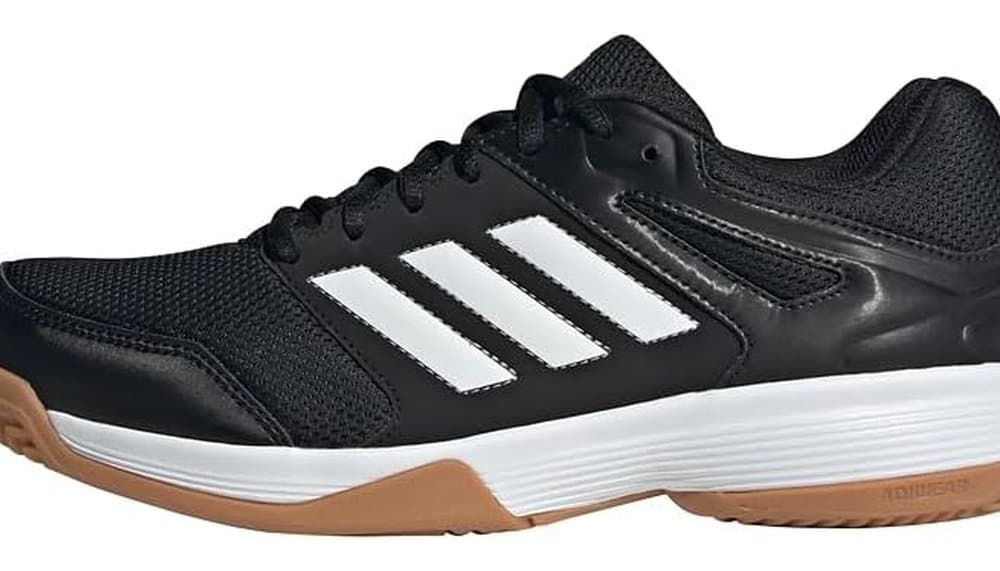
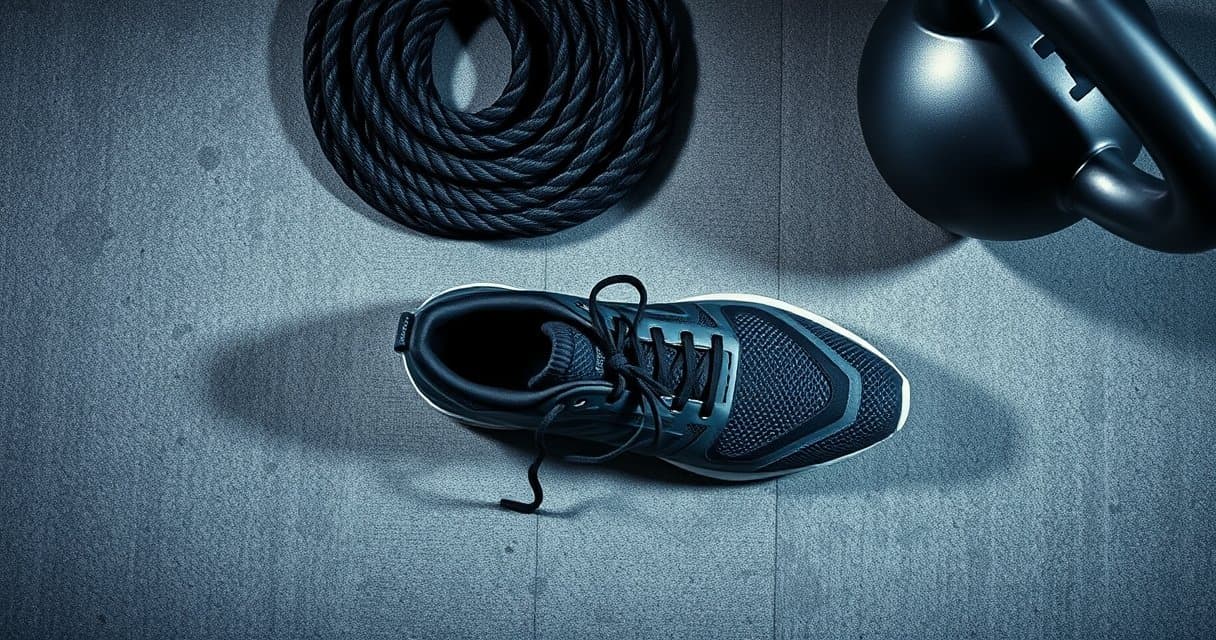
In the world of HYROX and functional fitness, the choice of footwear is not a minor detail. It is a strategic piece of equipment that must meet a complex set of requirements: running performance, stability under load, grip on varied surfaces, and resistance to the brutal sequence of events. The adidas Speedcourt Men's Indoor Shoes arrives on the market with a promise centered on indoor sports. But can this indoor shoe go the distance against the unique demands of a HYROX race? We will dissect its technical specifications and cross-reference community feedback to assess its relevance in our discipline.
Strengths (on paper and according to feedback)
Based on manufacturer specifications and consolidated reviews, several strengths immediately stand out for the functional fitness user.
Grip and responsiveness are the main selling points. The non-marketing Adiwear rubber outsole is designed to offer excellent traction on the smooth surfaces of gyms. For events like burpees, lunges, or quick changes of direction, this is a crucial point. The community also notes that the shoe is lightweight, which allows for a feeling of speed and does not penalize the running stride.
Immediate comfort is another widely praised point. User feedback regularly mentions a pleasant fit, a flexible upper, and a feeling of lightness from the first use. The use of breathable materials, like mesh, is a plus for dissipating heat during exertion.
Finally, heel support is reinforced by a counter, a non-negligible element for lateral movements or when carrying loads, even if that is not the shoe's primary role.
Weaknesses (the gray areas for HYROX)
The analysis also reveals significant limitations that must be seriously considered in the context of HYROX.
The critical point is cushioning, or rather its relative absence. Several customer reviews emphasize this: the shoe lacks heel cushioning. On paper, the EVA midsole is presented as lightweight, but it is not designed to absorb the repeated impacts of long-distance running. For a HYROX event that includes repeated 1km runs, this can become a real comfort issue and an increased risk of muscular or joint fatigue.
Durability is a recurring question, both in expert reviews and among some users. The lightweight construction and mesh upper, while comfortable, may present weaknesses against the extreme stresses of a sled push or a sled pull, where the foot rubs against the surface. Similarly, the sole designed for smooth floors could wear prematurely on other surfaces.
Finally, surface versatility is limited. These shoes are clearly designed for indoor use. Their performance on concrete, asphalt, or even an outdoor track is not guaranteed, and their use outside a gym is not recommended, which limits their utility for outdoor training.
Let's now evaluate how the adidas Speedcourt might perform station by station, based on its technical characteristics and trends in feedback.
Running (Run): This is likely its weakest point for HYROX. Lightweight is an asset, but the lack of cushioning reported by users would be a serious handicap on the 1km segments, especially at the end of the race when fatigue alters the stride. It might be suitable for short runs in training, but not as an optimal solution for competition.
Station Events (Sled, Farmers Carry, Lunges...): This is where the product could surprise. Its exceptional grip on smooth surfaces is its major asset. For sled push/pull, shoes that grip well are essential. The flat and wide sole could also offer good stability during farmers carries or loaded lunges. However, the question of the upper's robustness when rubbing against the sled remains.
Transitions and Agility (Burpees, Wall Balls, Rowing): This is its original home turf. Responsiveness and quick changes of direction are in its DNA. For burpees, shuttle runs, or lateral movements, the racket sports community confirms its performance. On the rower, the flat and grippy sole allows for good power transfer.
Under Fatigue and Fast Transitions: Lightweight and a secure, classic lacing system are assets for fast transitions. However, the lack of support and cushioning could be cruelly felt during the final stations, where technique deteriorates and the need for foot protection increases.
Technical Specifications
Characteristic
Detail
Shoe Type
Indoor / Court Shoe
Intended Use
Indoor Sports (badminton, tennis, squash, padel)
Upper
Synthetic (breathable mesh) with recycled elements (≥20%)
Midsole
EVA (for lightweight cushioning)
Outsole
Adiwear Rubber (non-marking)
Key Technologies
Heel counter, forefoot bumper, classic lacing
Weight
Lightweight (exact weight not specified)
Versatility
Smooth indoor surfaces only
What Users and the Community Say
A synthesis of hundreds of customer reviews and available expert analyses paints a clear consensus, with a few dissenting notes.
The recurring positive points revolve around three pillars. Immediate comfort and fit come first, with many users describing them as "very comfortable," "easy to wear," and "no blisters." Grip on gym surfaces is also massively praised for sports like badminton or tennis, with mentions of "perfect for changes of direction." Finally, lightweight and value for money are often highlighted.
The negative points or reservations focus on two aspects. Several reviews explicitly point out the lack of cushioning, especially in the heel, which can cause discomfort during prolonged sessions or repeated impacts. Long-term durability is questioned by some testers, although the materials are described as durable. Finally, some feedback notes sizing issues (model runs a bit small) and, in one isolated but notable case, a feeling of slipping on certain surfaces.
Overall, the product receives a high rating (4.4/5) for its target use (racket/indoor sports), confirming that it fulfills its primary function well.
Conclusion: Is the adidas Speedcourt a HYROX Shoe?
The answer is nuanced. The adidas Speedcourt Men's Indoor Shoes is not a shoe designed for HYROX, and it does not claim to be. Its analysis reveals a profile misaligned with the complete needs of a HYROX athlete.
Its main asset – high-level grip on smooth surfaces – makes it an interesting option for specific indoor training targeting strength and agility stations (sled, burpees, lunges). Its lightness is also appreciable.
However, its Achilles' heel – the pronounced lack of cushioning – almost disqualifies it outright as a serious competition shoe. The runs in HYROX are too long and too repeated to be tackled with such minimalist cushioning without risking discomfort or injury. Its durability against the most abrasive events is also not guaranteed.
Final Verdict: Consider the Speedcourt as a niche training shoe for the gym, potentially for technical sessions on strength and mobility stations. But for HYROX competition or complete training sessions including road or track running, turn to hybrid or cross-training models offering more generous cushioning, reinforced lateral support, and a more robust construction. They excel in their domain, but the domain of HYROX is broader and more demanding.
100% free and independent — All our articles are written independently, without any sponsorship. We may receive a commission if you make a purchase through our links, at no extra cost to you.