Introduction
Winter is not an excuse to put away your running shoes, especially when training for an event like HYROX. Slippery conditions can quickly turn a running session or functional workout into a hazardous exercise. It is in this context that accessories like the YakTrax Run Cleats for Running Shoes come into play. Promising grip on snow and ice, they aim to secure your stride. But the question we are interested in here is: does this product live up to its promises within the demanding context of HYROX, where performance, reliability, and fast transitions are king? We will dissect these cleats from the angle of functional fitness, based on technical specifications, community feedback, and available expert analyses.
Strengths
Based on technical data and user feedback, the YakTrax Run present several advantages for the indoor athlete facing the outdoors.
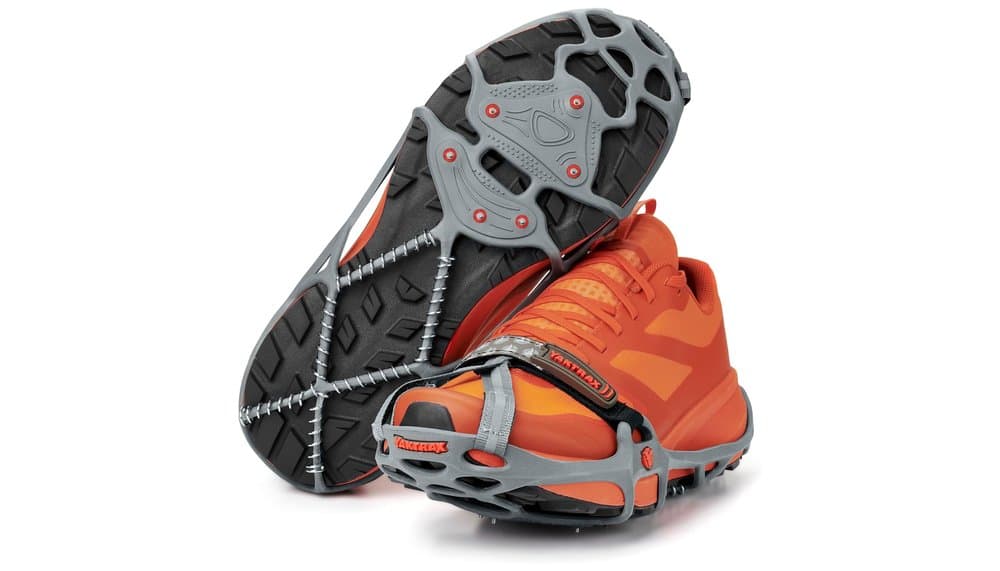
Lightweight design suited for running: With an announced weight of approximately 249 grams per pair, the addition to the shoe remains minimal. Testers emphasize that on packed snow or light ice, you almost forget you're wearing them while running, which is crucial for preserving a natural stride. The flexible rubber frame is designed to fit the sole of a running shoe, not a bulky boot.
360° grip on paper: The combination of 3mm carbide studs under the forefoot and 1.4mm stainless steel helical springs on the heel promises multi-directional grip. Reviews confirm that this configuration offers effective traction on packed snow and thin ice, securing push-offs during a run or lateral stances.
Quick setup and simple adjustment: This is a key point for HYROX, where every second counts in transitions. The reinforced elastic system and velcro strap over the instep allow you to put them on and take them off in a few seconds, even with gloves. An additional strap over the top of the foot, depending on the model, aims to improve stability.
Weaknesses
However, analysis of feedback from real-world conditions, especially during intense activities like trail running or long outings, reveals significant weaknesses.
Questionable durability under high intensity: This is the most recurring flaw. Several users report premature breakage. One runner testifies to losing 4 cleats during a 25km trail run with 1200m of elevation gain, after only one prior test run. Another mentions a break at the back during the first fitting. This raises a serious question about their robustness in the face of the demands of a powerful sled push, a heavy farmer's carry, or simply a long-distance run under fatigue.
Limited performance on extreme terrain: Web experts are unanimous: YakTrax Run are not technical crampons. Their effectiveness drops drastically in deep and powdery snow, where the studs are submerged, and on hard, smooth ice, where they cannot compete with aggressive spikes. For an outdoor HYROX in severe winter conditions, this limitation could be a deal-breaker.
Unsuitability for clean, hard surfaces: It is strictly advised not to run with them on dry asphalt or concrete. The carbide studs wear down visibly and the springs can bend or break. In a race format like HYROX that might alternate between indoor sections (rower, ski erg) and outdoor sections, this becomes a logistical headache.
See priceDetailed Analysis: The YakTrax Run Put to the HYROX Test
Let's now evaluate these cleats station by station, imagining a winter outdoor HYROX scenario or a snowy course.
Running (1km x 8): This is their preferred field of application. On a snowy or slightly icy circuit, they should provide the necessary confidence to maintain a cadence without fear of slipping. Their lightness and flexibility preserve running dynamics. However, if the course includes cleared sections or concrete, they will absolutely need to be removed, implying repeated stops incompatible with performance-seeking. Their limited durability also questions their ability to hold up over 8km of intense effort.
Sled Push / Sled Pull: This event requires maximum grip for the pushing phase. The springs under the heel of the YakTrax could help, but the vertical pressure and micro-slippage during the effort are extreme. The strength of the attachments and the junction between the studs and the rubber frame is put to the test here. Feedback reporting breakage on trail runs leaves little hope that they would survive multiple heavy sled pushes.
Farmers Carry / Sandbag Lunges: Lateral stability is crucial. The "360°" design is an asset on paper. However, the challenge comes from weight and fatigue. Under a heavy load, one seeks an absolutely fixed stance. The very flexibility of the frame, while comfortable, can introduce a sensation of instability or "float" that more rigid, spiked crampons do not present.
Burpees / Ground Station: This is likely the worst moment for them. The protruding studs under the forefoot will significantly hinder placing hands on the ground for the burpee, making the exercise uncomfortable or even dangerous. An athlete will almost certainly have to remove them before this station, which is totally unrealistic in the flow of a race.
Fast Transitions: Their asset of easy installation becomes secondary here. The real problem is their narrow specialization. They are only useful on specific slippery surfaces. In a HYROX, where one alternates between running, rowing (indoors), and ground exercises, they become a cumbersome accessory that must be constantly managed, hindering the fluidity of the race.
Technical Specifications
| Characteristic | Detail |
|---|---|
| Model | YakTrax Run Cleats for Running Shoes |
| Stud Type | 6 tungsten carbide studs (3mm) + stainless steel helical springs (1.4mm) |
| Frame | Flexible, cold-resistant rubber (tested down to -6°C) |
| Fastening System | Adjustable front/heel elastic + velcro strap over the instep |
| Weight (pair) | Approximately 249 grams |
| Available Sizes | S, M, L, XL (to be chosen based on shoe size) |
| Intended Use | Running, active walking on snow and ice |
| Surface to Avoid | Asphalt, concrete, uncovered hard surfaces |
What Users and Testers Say
The synthesis of hundreds of customer reviews and available expert analyses paints a nuanced consensus, which corroborates our HYROX-centric analysis.
The praise mainly concerns ease of use and immediate comfort. Many casual runners find them perfect for securing their winter outings on snowy paths or icy sidewalks. Phrases like "you forget you're wearing them while running" or "impressively effective on packed snow" often come up. The ease of putting them on and taking them off is also highly appreciated.
The criticisms are sharper and concern two major aspects:
- Fragile durability: Accounts of breakage (torn-off studs, broken elastics, bent springs) after moderate use, or even from the first use, are too numerous to ignore. One user sums it up: "Not sturdy at all!... avoid!".
- Limited performance on demanding terrain: As soon as the terrain becomes technical (black ice, deep snow, significant elevation change), feedback is mixed. "Ineffective" on climbs/descents over varied snow, or simply "useless" on ice, are terms that appear. Expert testers confirm they are outperformed by spiked models (like Kahtoola MICROspikes) for serious winter trail running.
An additional point of caution is size selection: several reviews note that the sizing guide can be misleading, leading to a model that is too tight or too loose, thus compromising effectiveness and safety.
Conclusion
The YakTrax Run Cleats for Running Shoes are a product that occupies a very specific niche, but one that proves too narrow and potentially too fragile for the demands of HYROX.
For the HYROX athlete, the conclusion is clear. These cleats can be a temporary and practical solution for a winter running workout on a known, entirely and uniformly snowy course, where you can put them on at the start and take them off at the end. Their comfort and grip on packed snow are their main assets.
However, faced with the specific constraints of competition – extreme intensity, heavy loads, fast transitions, variety of surfaces and movements – they show their limits. Their uncertain durability makes them unreliable for prolonged, intense effort. Their unsuitability for burpees and hard surfaces makes them a cumbersome accessory in a race flow. Finally, their performance on hard ice is inferior to that of more technical alternatives.
If you are preparing for a HYROX in extreme winter conditions, you should probably look towards more robust and aggressive trail crampons, even if it means sacrificing a bit of lightness. The YakTrax Run, for their part, remain a smart backup accessory for the urban runner or Sunday jogger who wants to secure their stride on patches of ice, but not the reliable and versatile performance tool required for a high-level functional fitness competition.
100% free and independent — All our articles are written independently, without any sponsorship. We may receive a commission if you make a purchase through our links, at no extra cost to you.
You might also like
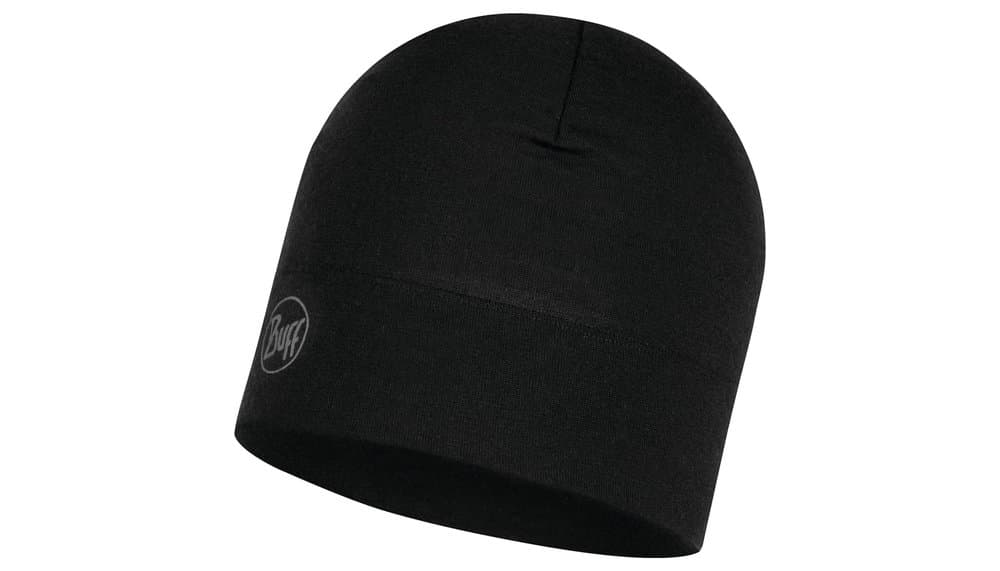
Buff Merino Midweight Beanie Review
Strategic thermal regulation for HYROX athletes. The Buff Merino Midweight Beanie uses merino wool for optimal warmth without overheating.
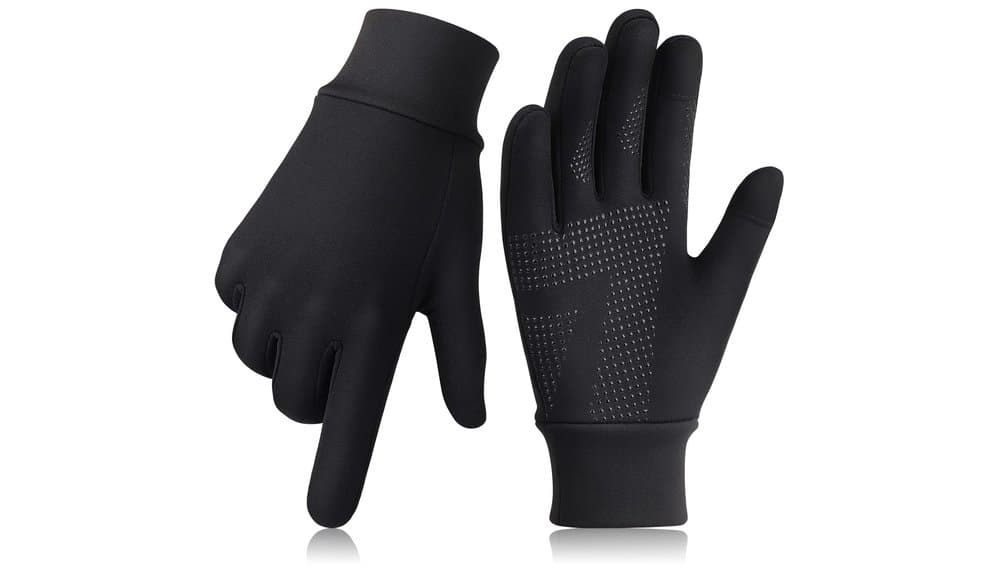
GXCROR Running Gloves Review: Touch Screen Fleece Test
GXCROR running gloves tested for HYROX: touchscreen, grip & warmth. Can they survive brutal workouts? Our review.
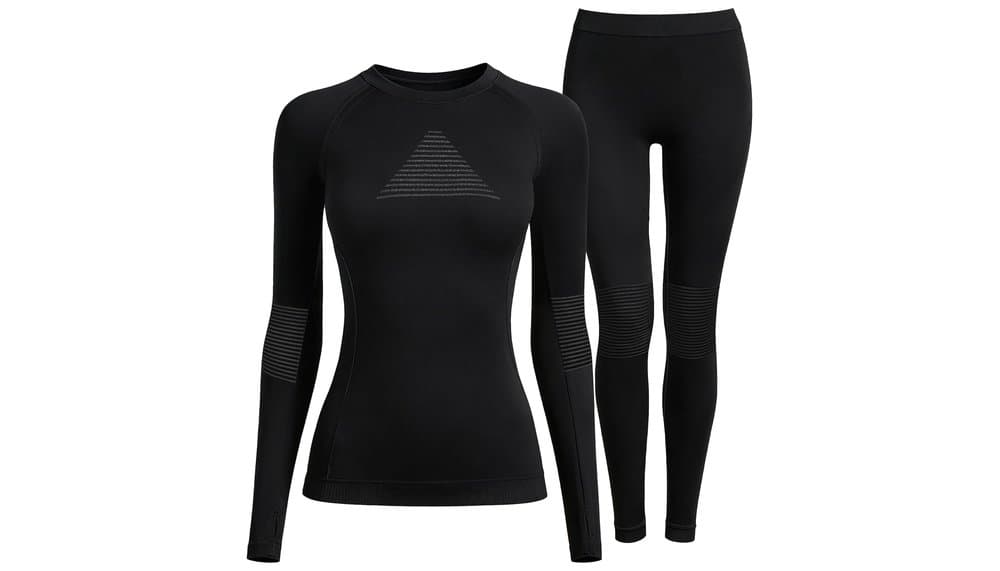
EIISION Women's Thermal Top and Leggings Set Review
EIISION thermal base layer for women. Stay warm and mobile during HYROX workouts in the cold. Ideal for running, sled push, and burpees.
Guides you might like
Street Workout Elastic Bands Buying Guide
Use resistance bands for pull-ups to learn proper technique and build strength safely. Ideal for all levels to progress at your own pace.

Ideal Watches for Hyrox Quick Buying Guide
Discover how to choose the perfect Hyrox watch that tracks all disciplines, offers precise heart rate data, and withstands intense training efforts.
Hyrox Shoes Buying Guide
Choose the right Hyrox shoes to prevent blisters and boost performance. Find the versatile hybrid essential for success.