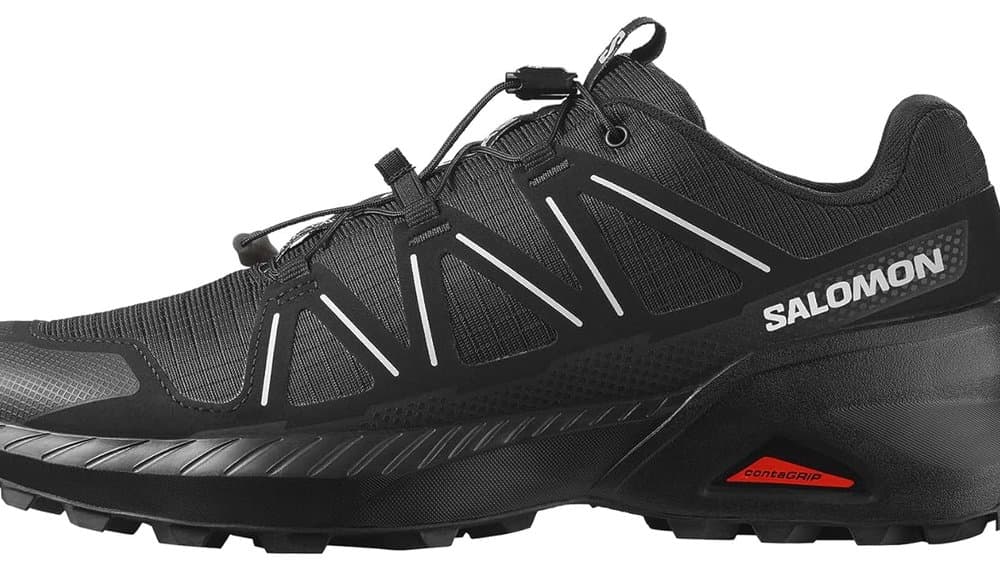
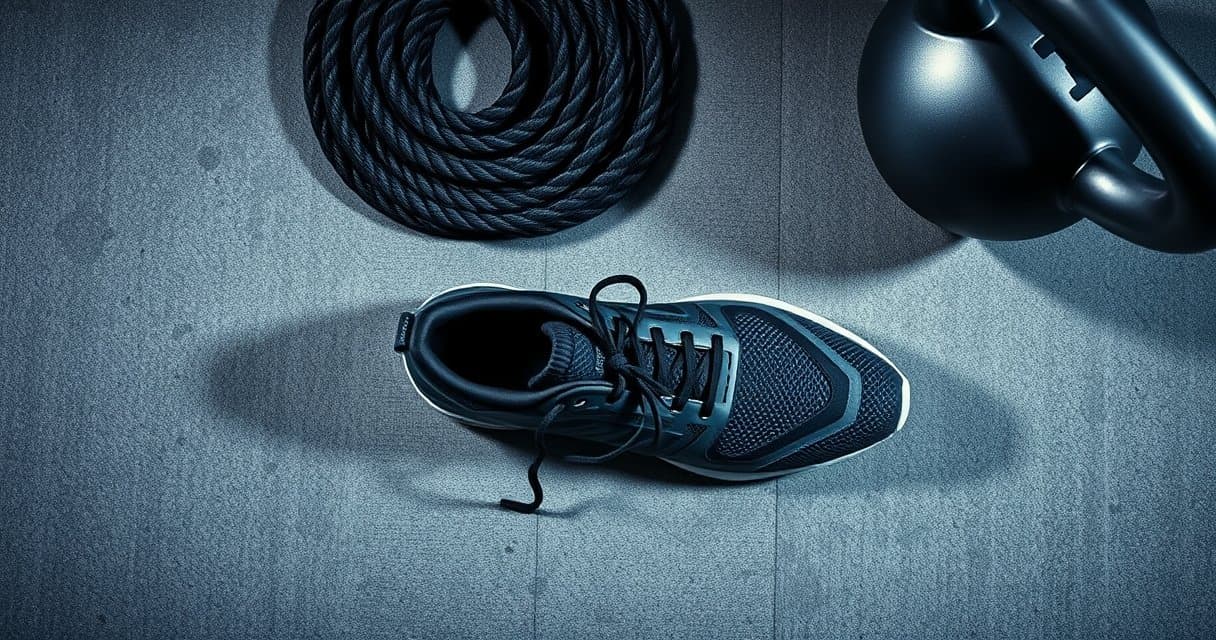
The world of HYROX is unforgiving. A shoe must be a precision tool, capable of handling the violence of running, the stability of the rower, the crushing weight of the sled push, the mobility of burpees, and the raw load of the farmers carry, all in rapid succession and under the grip of fatigue. You do not choose your shoes lightly. In this demanding context, does the Salomon Speedcross Peak Men's Hiking Shoes, a model born from trail running, claim a place in our gym bag? We will dissect its specifications and confront its promises with feedback from the community and testers to determine if it can meet the unique demands of a HYROX competition.
Strengths
Based on user feedback and technical specifications, the Speedcross Peak displays several strengths that can immediately capture the attention of a functional fitness athlete.
Exceptional grip on slippery surfaces: This is its killer feature. The Contagrip outsole with its deep, aggressive lugs is unanimously praised. For events like the sled push on a smooth or potentially wet floor (outdoors), or for lateral movements during burpees, this traction offers an immediate sense of security.
Support and precise fit: The SensiFit technology and Quicklace lacing system provide, according to most reviews, a uniform and secure lockdown. For so-called "narrow" feet, this support is often described as perfect. The quick-lace system is a non-negligible advantage for transitions between stations, allowing for readjustment in seconds.
Immediate comfort and relative lightness: Many users report no break-in period. The shoe is comfortable from the first use, a crucial point for a competition where you cannot afford blisters. Its construction also makes it lighter than classic hiking shoes.
Weaknesses
However, the analysis reveals structural limitations that raise questions within the very specific context of HYROX.
Limited durability on hard surfaces: This is the most recurrent issue. Expert testers and customer reviews emphasize that the lugs wear out quickly on asphalt, concrete, or hard surfaces. In a HYROX, where movement between stations and sometimes certain events take place on smooth floors, this premature wear is a real problem.
Potentially insufficient cushioning for repeated impacts: The midsole, while comfortable, is described as relatively firm. The forefoot cushioning is sometimes judged to be minimal. On the long running distances (often on track or hard gym floors) and during jump or burpee landings under fatigue, this rigidity can translate to increased muscular and joint fatigue.
Average lateral stability and a high drop: With a 10 mm drop (height difference between heel and forefoot), the shoe encourages a heel strike. For functional movements requiring a flat and stable position (like heavy farmers carries or loaded movements), this is not ideal. Furthermore, its design is not optimized for lateral stability, which can be a handicap during lunging or rotational movements.
A snug, even narrow fit: The community consistently notes that this shoe fits narrow feet better. Athletes with wide feet may experience uncomfortable compression, especially during the natural swelling of the foot during intense effort.
Let's now evaluate the theoretical performance of the Speedcross Peak station by station.
Running (1km x 8): Its strong point, grip, becomes secondary on a track or smooth gym floor. Conversely, its firm midsole and significant drop do not favor a natural and economical stride on flat ground. The cushioning may prove insufficient for the repetition of impacts, especially at the end of a run when fatigue impairs technique.
Rower (1km x 8): This is likely the event where it is most neutral. The flat, grippy sole allows for good force transmission on the footplate. The high heel is not a problem here.
Sled Push & Sled Pull: Here, its aggressive grip is a major asset, especially if the floor is smooth. Ankle stability is adequate for pushing, but the shoe's height and drop could hinder a perfectly optimized pushing position.
Burpees: The Quicklace is practical for quickly tightening if needed. Ground grip is excellent for foot placement. However, the relative rigidity of the sole can make hand landings less pleasant, and lateral stability is not its strong point during lunges.
Farmers Carry / Sandbag Lunges: This is a critical point. The 10 mm drop and relatively high sole hinder stability and connection to the ground, which is essential for carrying heavy loads safely. One generally looks for a flatter, lower-to-the-ground shoe for these movements.
Transitions and overall fatigue: Its immediate comfort and quick lacing are assets for transitions. However, under the effect of cumulative fatigue, the potential weaknesses (lack of cushioning, narrowness, instability) can be amplified and become bothersome.
Technical Specifications
Characteristic
Detail (based on specifications and feedback)
Type
Trail running / light hiking shoe
Drop
10 mm (high)
Outsole
Contagrip (aggressive grip)
Support
SensiFit (targeted lockdown)
Lacing
Quicklace system (fast)
Breathability
Air-mesh upper (standard non-waterproof)
Weight
Relatively light (for a trail shoe)
Sizing Advice
Size up half a size, snug fit (narrow for wide feet)
What Users and Testers Say
The synthesis of hundreds of customer reviews and expert analyses confirms the identified trends.
The praise is concentrated on three aspects:
Comfort from the first use is highly praised. "No break-in period", "comfortable immediately".
Grip on soft or slippery terrain is unanimous. "Perfect grip", "anti-slip sole allows access to all types of terrain".
The practicality of the Quicklace system is greatly appreciated. "Easy to put on and take off", "convenient".
Recurring criticisms point to lasting limitations:
The durability of the outsole is questioned, especially on asphalt. "Wears out quickly" (customer review), "the lugs wear quickly on hard surfaces" (expert).
The narrow fit is a barrier for many. "Not made for wide feet", "they are likely to squeeze you".
Some note that the comfort does not equal other models at a similar price, and laces sometimes judged as fragile.
Experts add that cushioning may be insufficient for long distances and that stability on technical terrain (rocky) is not optimal.
Conclusion: Is the Speedcross Peak a HYROX Shoe?
The answer is nuanced. The Salomon Speedcross Peak Men's Hiking Shoes is not a shoe designed for HYROX, and the analysis confirms this.
It is a specialist in grip on soft, slippery terrain, endowed with immediate comfort and a precise fit for narrow feet. If your absolute priority is unshakable traction for events like the sled push on a smooth floor, and you can tolerate a firm cushioning, it could have a situational interest.
However, for the full range of HYROX events, its weaknesses are too penalizing. Its lack of cushioning suited for repeated impacts on hard surfaces, its high drop detrimental to stability under heavy loads, and its limited durability on hard surfaces make it a suboptimal choice, even risky for performance and safety over the duration of a competition.
In summary, it is an excellent trail shoe for mud and paths, but it does not possess the versatility, flat stability, and adapted cushioning required to excel in the demanding and varied discipline of HYROX. For this competition, cross-training or road-running shoes, designed for multi-directional movement and impacts on hard surfaces, remain much wiser and safer choices.
100% free and independent — All our articles are written independently, without any sponsorship. We may receive a commission if you make a purchase through our links, at no extra cost to you.